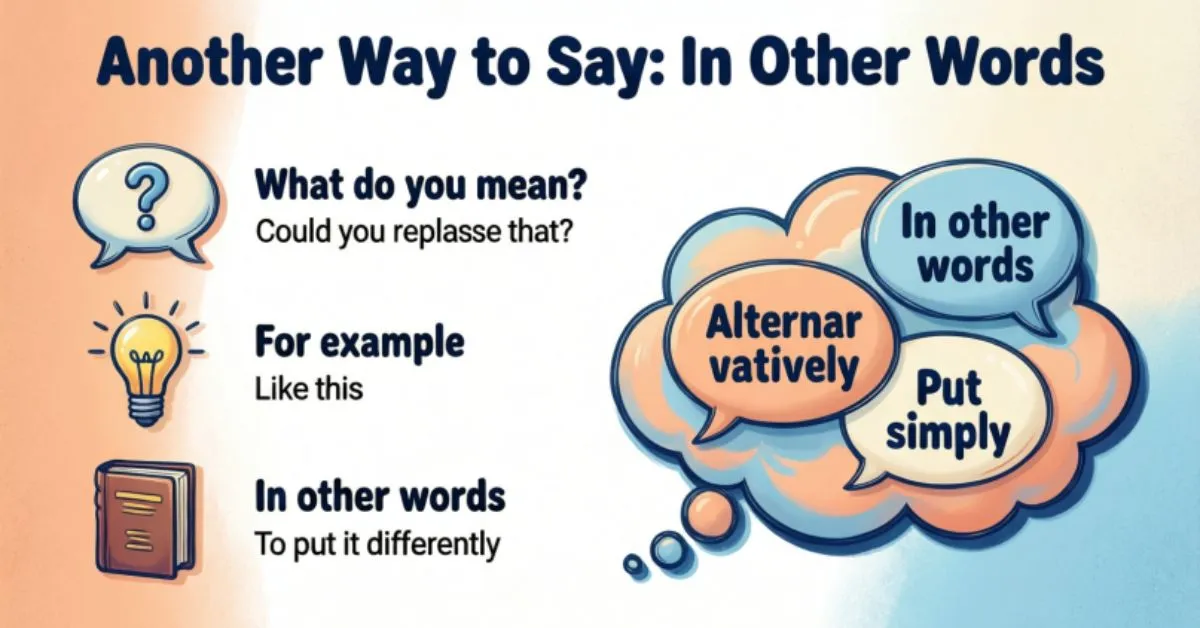
Words shape how people understand us. Sometimes, what we say is right, but how we say it feels confusing, repetitive, or too complex. That’s where phrases like another way to say in other words come in. We use them to clarify ideas, restate thoughts, and make sure the listener truly understands our point.
But repeating in other words again and again can sound boring or lazy. Whether you are writing a blog, sending a message, explaining something at work, or chatting with friends, having better alternatives makes your communication stronger and smoother.
In this guide, you’ll learn many natural, simple, and practical alternatives to in other words. You’ll see how to use them in different situations, from formal writing to casual talk and even fun, emotional moments. By the end, you’ll never feel stuck repeating the same phrase again.
What Does “In Other Words” Really Mean?
In other words is used to restate or explain something more clearly. It helps the listener understand your idea better. It often means:
- Let me explain again
- Let me simplify this
- Here is the same idea in a clearer way
Knowing this meaning helps you choose the right alternative based on tone and situation.
Why You Should Use Alternatives to “In Other Words”
Using different phrases keeps your language fresh and engaging. It also helps you match the tone of your audience. For example, what works in an essay may not work in a text message.
Benefits include:
- Better clarity
- Less repetition
- More natural conversation
- Stronger writing style
First Context: Formal Writing and Professional Use
In professional settings, clarity and polish matter. These alternatives work well in emails, reports, presentations, and academic writing.
- That is to say
- Put another way
- To rephrase
- To clarify
- Expressed differently
- Stated differently
- In simpler terms
- To explain further
- From another perspective
- Reworded
- Clarified as
- More specifically
- Restated as
- In clearer language
- To make it clear
- Explained another way
- Reframed as
- Viewed differently
- Summed up as
- Defined another way
These phrases sound confident, calm, and professional without feeling stiff.
Second Context: Everyday Conversation and Casual Speech
In daily life, people want language that feels natural and easy. These alternatives fit perfectly into friendly chats, texts, and social media.
- I mean
- What I’m saying is
- Let me explain
- Basically
- Simply put
- So yeah
- What that means is
- Here’s the thing
- Long story short
- In simple words
- To make it easy
- Said simply
- What I mean is
- Just saying
- So basically
- Let’s say it this way
- To keep it simple
- Think of it like this
- Another way to look at it
- What I’m getting at
These feel relaxed and human, not scripted.
Third Context: Creative, Emotional, or Humorous Use
Sometimes you want warmth, humor, or personality. These alternatives add emotion and creativity while still explaining your point.
- Let me put it this way
- Picture it like this
- Here’s the real story
- The short version is
- If I’m honest
- Heart to heart
- Plain and simple
- Let’s be real
- Here’s the truth
- At the end of the day
- Bottom line
- The funny part is
- Here’s the twist
- Think about it this way
- To break it down
- Let me spell it out
- Real talk
- No fancy words
- Just to be clear
- Here’s the deal
These work great in storytelling, personal blogs, and friendly advice.
Fourth Context: Short and Quick Alternatives
Sometimes you need speed. These options are perfect for quick replies, captions, or short explanations.
- Basically
- Simply
- Plainly
- Briefly
- Short version
- Meaning
- So
- In short
- Quick version
- To sum up
- Simply said
- Clear version
- Fast answer
- Quick take
- Bottom line
- Simple truth
- Easy answer
- Short answer
- Plain truth
- Quick summary
Short phrases keep communication fast and clear.
When You Should Avoid Using “In Other Words”
Overusing one phrase can weaken your message. Avoid repeating in other words when:
- The idea is already clear
- The sentence becomes too long
- The tone feels forced
- You are writing creatively
Switching phrases keeps your content fresh.
How Tone Changes Your Choice of Words
Tone matters more than people think. A formal tone needs clean, neutral phrases. Casual talk needs warmth. Emotional writing needs honesty.
Before choosing an alternative, ask:
- Who am I talking to?
- How formal is this moment?
- Do I want clarity, warmth, or humor?
Common Mistakes to Avoid
Many people misuse restating phrases. Watch out for:
- Repeating the same phrase too often
- Using formal phrases in casual chats
- Overexplaining simple ideas
- Making sentences too long
Good communication is clear, not crowded.
How Writers and Bloggers Can Use These Phrases
Writers can use these alternatives to:
- Improve readability
- Avoid keyword stuffing
- Increase flow
- Keep readers engaged
Using varied phrasing helps SEO and user experience.
How Students Can Benefit from These Alternatives
Students often repeat in other words in essays. Using alternatives:
- Improves writing quality
- Sounds more academic
- Shows strong vocabulary
- Keeps teachers engaged
Simple changes make a big difference.
Using Alternatives in Social Media Content
Social posts need quick clarity. These phrases help explain ideas without sounding robotic. They also keep captions friendly and relatable.
Short, natural alternatives work best here.
Using These Phrases in Speeches and Presentations
When speaking, clarity matters even more. Restating ideas helps listeners stay focused. Use natural phrases that sound spoken, not written.
Practice saying them out loud to see what feels right.
Tips for Using Alternatives Naturally
- Match the phrase to the situation
- Keep sentences short
- Avoid repeating the same phrase
- Choose clarity over fancy words
- Read your sentence out loud
If it sounds natural, it works.
Conclusion: Say It Better, Not Harder
Finding another way to say in other words is not about sounding smart. It’s about being clear, human, and understood. With the right phrase, your message feels smoother, friendlier, and more confident.
Use formal options when needed. Switch to casual ones in daily talk. Add humor when emotion matters. Try different phrases and see what fits your voice best.
Which alternative do you use most in your daily conversations? Try one new phrase today and feel the difference.

Charles Dickens is a passionate writer with 6 years of experience, specializing in English grammar and writing tips. He shares practical advice, engaging tutorials, and language insights on Responsze.com, helping readers improve their writing skills and master clear, effective communication every day.