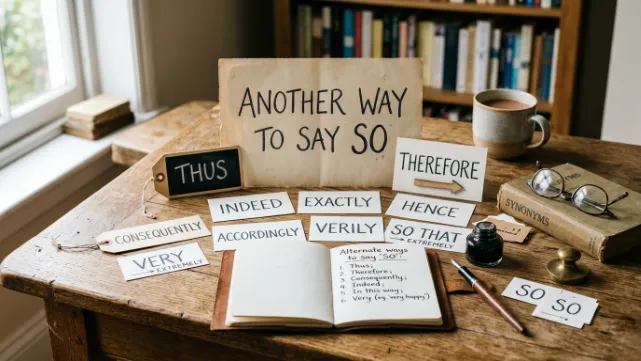
Words shape how clearly we communicate. The word “so” is one of the most common words in English. We use it to show a result, continue a thought, explain a reason, or add emphasis. While it is useful, using “so” too often can make your writing and speaking sound repetitive.
Learning another way to say so helps you sound more natural, professional, and interesting. If you are writing an email, speaking in a meeting, creating content, or chatting with friends, knowing different alternatives lets you match your tone to every situation.
In this guide, you’ll discover practical alternatives for different contexts, along with conversation tips that will help you choose the best word every time.
Another Way to Say So in Professional Writing
In business emails, reports, and workplace conversations, replacing so with more precise words makes your message sound polished and professional.
- Therefore
- Thus
- Hence
- Consequently
- As a result
- Accordingly
- For this reason
- Because of that
- Due to this
- In turn
- Which means
- That is why
- Therefore then
- Given that
- Under these circumstances
- In light of this
- As such
- On that basis
- It follows that
- For that reason
- Subsequently
- This led to
Another Way to Say So in Everyday Conversations
Daily conversations usually need simple and friendly language. These alternatives help your speech sound fresh without being too formal.
- That’s why
- Because of that
- Which is why
- For that reason
- Then
- As a result
- That means
- Since that’s the case
- In that case
- Well then
- Alright then
- Because
- After that
- Next
- As expected
- Naturally
- Of course
- In return
- Because of this
- And that’s it
- This means
- That explains it
Another Way to Say So in Academic Writing
Academic writing should be clear, logical, and formal. These alternatives help connect ideas while maintaining a scholarly tone.
- Therefore
- Consequently
- Thus
- Hence
- As a result
- Accordingly
- It follows that
- For this reason
- Based on these findings
- In conclusion
- Given this
- This indicates that
- This suggests that
- As evidenced by
- On this basis
- In light of these results
- Which demonstrates
- This confirms
- Owing to this
- It can be concluded that
- Because of these factors
- Subsequently
Another Way to Say So in Emails
Whether you’re writing to a coworker, client, or friend, these alternatives help your emails sound smooth and professional.
- Therefore
- That’s why
- As a result
- Because of that
- For this reason
- In that case
- Which means
- Consequently
- Accordingly
- Since that’s the case
- That being said
- With that in mind
- Due to this
- Because
- This means
- Given that
- Naturally
- So then
- After that
- Hence
- Under the circumstances
- Following this
Another Way to Say So for Essays
Essays often require transition words that connect ideas logically. These options improve flow and readability.
- Therefore
- Thus
- Consequently
- Hence
- As a result
- Accordingly
- It follows that
- For this reason
- Due to this
- In conclusion
- This demonstrates
- This illustrates
- This proves
- Based on this
- Given these facts
- Which leads to
- As such
- On that basis
- In light of this
- Because of this
- Subsequently
- Therefore it can be said
Another Way to Say So in Text Messages
Texting is quick and casual, so these alternatives keep conversations natural and friendly.
- That’s why
- Then
- Alright
- Cool
- Got it
- Makes sense
- Okay then
- Because of that
- In that case
- Sounds good
- Perfect
- Sure
- Right
- Exactly
- Totally
- Fair enough
- I see
- No worries
- All good
- Deal
- Alrighty
- Done
Another Way to Say So to Show a Result
Sometimes you want to clearly explain the outcome of something. These alternatives emphasize results and consequences.
- As a result
- Therefore
- Consequently
- Thus
- Hence
- Accordingly
- Because of that
- For that reason
- Which means
- This caused
- This led to
- Due to this
- In turn
- As such
- Resulting in
- Leading to
- Following this
- Owing to this
- Therefore it happened
- That is why
- This produced
- This brought about
Funny and Creative Alternatives to Say So
Want to make your conversations more fun? These creative alternatives add personality and humor.
- And boom
- Just like that
- That’s the magic
- There you have it
- Problem solved
- Mystery solved
- Easy as that
- That’s the trick
- Case closed
- End of story
- Simple enough
- Like magic
- That’s how it happened
- Done and dusted
- No surprise there
- The rest is history
- That’s the whole story
- Pretty neat
- Makes perfect sense
- It all adds up
- That’s the secret
- Just because
Short Alternatives to Say So
Sometimes a quick replacement is all you need. These short options work well in texts, emails, and conversations.
- Thus
- Hence
- Therefore
- Then
- Accordingly
- Consequently
- Accordingly
- Because
- Therefore
- Since
- Ergo
- Thereby
- Accordingly
- Thusly
- Next
- Therefore then
- Naturally
- Surely
- Indeed
- Right
- Exactly
- Therefore
Tips for Using Another Way to Say So
Choosing the right alternative depends on your audience and purpose.
Match the Tone
Use formal words like therefore or consequently in reports and business emails. Choose casual phrases like that’s why or because of that when talking with friends.
Keep It Natural
Avoid replacing every so in a paragraph. Sometimes the original word is still the best choice.
Think About the Meaning
Some alternatives show a result, while others explain a reason. Pick the one that matches your sentence.
Avoid Repetition
Mix different alternatives throughout your writing to make it more engaging.
Keep It Simple
Use words your audience will easily understand. Clear communication is always better than complicated wording.
Conclusion
Knowing another way to say so can make your writing and speaking clearer, smoother, and more engaging. If you’re writing a professional email, having a casual conversation, creating content, or simply trying to avoid repetition, the right alternative helps your message sound more natural.
Choose the phrase that best fits your audience, tone, and purpose. Practice using different options in your daily conversations and writing to build confidence and improve your communication skills.
Which alternative do you use most often? Try a few new ones today and see how much more natural your English sounds.

I am Virginia Woolf, a passionate writer with 3 years of experience crafting engaging content. At Responsze.com, I focus on delivering clear, insightful guidance on English grammar and effective writing techniques. I love helping readers improve their skills and make language learning both easy and enjoyable.