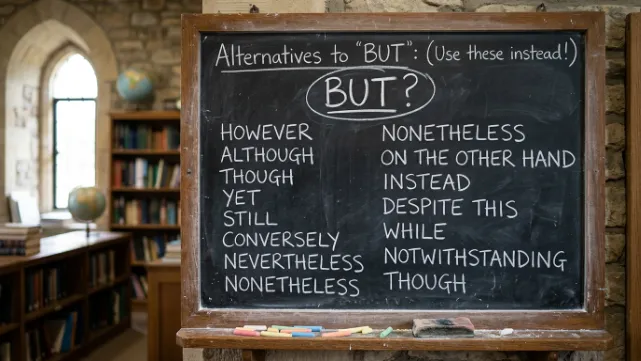
Words matter in every conversation and every piece of writing. The word “but” is one of the most common words in English. While it is useful, using it too often can make your writing sound repetitive or less engaging.
Learning another way to say but helps you improve your vocabulary, write more naturally, and communicate your ideas with greater clarity. If you’re writing an email, school assignment, blog post, business message, or simply chatting with friends, choosing the right alternative can make your sentences flow better.
In this guide, you’ll discover practical alternatives to “but” for different situations. You’ll also learn when to use each option, see plenty of examples, and get helpful tips for making your writing sound smoother and more professional.
Another Way to Say But in Formal Writing
In formal writing, replacing but can make your work sound polished and professional. These alternatives work well in essays, reports, emails, and business documents.
- However
- Nevertheless
- Nonetheless
- Yet
- Still
- Even so
- On the other hand
- In contrast
- Conversely
- Although
- Though
- Whereas
- While
- Despite that
- In spite of that
- Regardless
- Having said that
- Be that as it may
- Alternatively
- Instead
- Except that
- Even though
Another Way to Say But in Everyday Conversations
Daily conversations often sound better with simple and natural alternatives.
- Though
- Still
- Yet
- Even so
- Anyway
- Except
- Besides
- Instead
- Then again
- At the same time
- Although
- While
- Even though
- Regardless
- All the same
- Mind you
- On the flip side
- In contrast
- Despite that
- That said
- Even then
- As it happens
Another Way to Say But in Academic Writing
Academic writing should sound clear, logical, and professional. These alternatives help connect ideas smoothly without repeating but.
- However
- Nevertheless
- Nonetheless
- In contrast
- Conversely
- On the contrary
- Whereas
- While
- Although
- Even though
- Despite this
- In spite of this
- That said
- Even so
- Still
- Yet
- Alternatively
- Rather
- Instead
- Regardless
- Notwithstanding
- Having said that
Another Way to Say But in Business Emails
Business emails should be polite and professional. These alternatives help you disagree, explain, or introduce another point without sounding too direct.
- However
- That said
- Even so
- Still
- Nevertheless
- Nonetheless
- On the other hand
- While
- Although
- Yet
- Instead
- Alternatively
- Even though
- Despite that
- In contrast
- Having said that
- Regardless
- At the same time
- Whereas
- Except that
- Though
- Even then
Another Way to Say But for Text Messages and Social Media
When chatting online, short and natural alternatives make your messages sound more conversational.
- Though
- Still
- Yet
- Anyway
- Then again
- Even so
- At the same time
- On the flip side
- Here’s the thing
- Except
- Instead
- Besides
- Mind you
- Even then
- Regardless
- That said
- All the same
- Plus
- While
- Although
- Wait though
- Not gonna lie though
Another Way to Say But for Showing Contrast
Sometimes you want to compare two opposite ideas. These alternatives make the contrast stronger and clearer.
- On the other hand
- In contrast
- Conversely
- Whereas
- While
- Yet
- Still
- However
- Nevertheless
- Nonetheless
- Even so
- Although
- Though
- Despite that
- In spite of that
- At the same time
- Instead
- Rather
- On the contrary
- Alternatively
- Except that
- Regardless
Another Way to Say But for Positive Communication
These alternatives help soften disagreement and keep your tone friendly and respectful.
- That said
- Even so
- Still
- Having said that
- At the same time
- On the bright side
- Even then
- Although
- Though
- Yet
- Nevertheless
- Nonetheless
- However
- Instead
- While
- In contrast
- Despite that
- All the same
- Regardless
- Even though
- Here’s the good news
- Looking at it another way
Funny and Creative Alternatives to But
Sometimes you want your writing or conversation to sound playful. These creative alternatives add personality.
- Plot twist
- Here’s the catch
- Wait a second
- Hold on
- Not so fast
- Surprise
- The funny part is
- On the bright side
- Then again
- Guess what
- Here’s the thing
- Life had other plans
- Believe it or not
- There’s a twist
- Funny enough
- The catch is
- That’s not all
- Meanwhile
- Even better
- Oddly enough
- Here’s where it gets interesting
- As luck would have it
Short Alternatives to But
Need a quick replacement? These short options work in many situations.
- Yet
- Still
- Though
- However
- Except
- Instead
- Although
- While
- Whereas
- Conversely
- Nevertheless
- Nonetheless
- Even so
- Regardless
- Then
- Plus
- Besides
- Only
- Save
- Apart from
- Though still
- Even then
Tips for Using Another Way to Say But
Match the Tone
Choose formal alternatives like however or nevertheless for professional writing. Use though or still in casual conversations.
Keep It Natural
Do not replace every but. Sometimes the simplest word is still the best choice.
Think About Your Audience
Formal readers may expect polished transitions, while friends usually prefer simple language.
Improve Sentence Flow
Mix different transition words to avoid repeating the same connector throughout your writing.
Practice with Examples
The more you read and write, the easier it becomes to choose the best alternative naturally.
Conclusion
Learning another way to say but is an easy way to improve your speaking and writing. Small word choices can make a big difference in how clear, professional, and interesting your communication sounds.
Choose alternatives based on your audience and situation. Formal writing may need words like however or nevertheless, while casual conversations often sound better with though or still. Keep practicing, save your favorite alternatives, and use them naturally in everyday communication.
Which alternative to but do you use most often? Try using a new one in your next conversation or piece of writing!

I am Virginia Woolf, a passionate writer with 3 years of experience crafting engaging content. At Responsze.com, I focus on delivering clear, insightful guidance on English grammar and effective writing techniques. I love helping readers improve their skills and make language learning both easy and enjoyable.