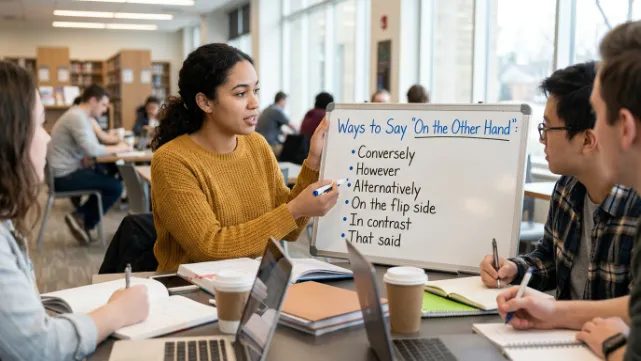
Words matter when you want to compare two ideas, show a different opinion, or present another side of a situation. The phrase “on the other hand” is one of the most common transition words in English. While it works well, using it too often can make your writing and speech sound repetitive.
Learning another way to say on the other hand helps you sound more natural, confident, and engaging. If you are writing an essay, sending a business email, having a conversation, or creating content, choosing the right alternative improves clarity and keeps your audience interested.
In this guide, you’ll discover practical alternatives for different situations, along with helpful tips to make your communication smoother and more professional.
Another Way to Say On the Other Hand in Formal Writing
Formal writing often requires clear transitions that connect contrasting ideas without sounding repetitive. These alternatives work well in essays, reports, academic papers, and professional documents.
- Conversely
- In contrast
- Alternatively
- By comparison
- In comparison
- On the contrary
- That said
- Even so
- Nevertheless
- Nonetheless
- Still
- Yet
- Despite that
- Whereas
- Although
- While
- Instead
- Rather
- As opposed to this
- By contrast
- At the same time
- Looking at it differently
Another Way to Say On the Other Hand in Everyday Conversations
When talking with friends, family, or coworkers, simple and natural phrases sound much better than formal expressions.
- But then again
- At the same time
- Still
- Even so
- That said
- Then again
- On the flip side
- On the bright side
- In another way
- From another point of view
- Looking at it differently
- There’s another side
- At the same moment
- On a different note
- From another angle
- It could also be said
- But remember
- On the opposite side
- At the end of the day
- Another thing is
- Yet
- However
Another Way to Say On the Other Hand in Business Emails
Business communication should sound clear, professional, and easy to understand. These alternatives help you present another viewpoint without repeating the same phrase.
- However
- That being said
- Conversely
- Even so
- Nevertheless
- Nonetheless
- Alternatively
- In contrast
- By comparison
- Despite this
- At the same time
- While that is true
- On a different note
- Another consideration is
- From a business perspective
- Looking at the situation differently
- Yet
- Rather
- Still
- On the contrary
- In another respect
- From another standpoint
Another Way to Say On the Other Hand in Essays and Academic Writing
Academic writing benefits from precise transition words that connect ideas logically and improve readability.
- Conversely
- In contrast
- By contrast
- Alternatively
- On the contrary
- Nevertheless
- Nonetheless
- Even so
- Despite this
- Whereas
- While
- In comparison
- By comparison
- Still
- Yet
- Rather
- Instead
- On the opposite side
- From another perspective
- Viewed differently
- Another interpretation is
- It is equally important to consider
Another Way to Say On the Other Hand for Presentations and Public Speaking
When speaking to an audience, smooth transitions keep listeners engaged and make your message easier to follow.
- Let’s look at it another way
- From another angle
- There’s another perspective
- At the same time
- However
- But there’s more
- Now consider this
- Another point worth mentioning
- On the flip side
- Looking at the bigger picture
- Here’s another thought
- Yet
- Even so
- Still
- Alternatively
- Let’s shift our focus
- Now let’s examine the other side
- Another important point is
- Think about this
- Here’s a different view
- Let’s consider another option
- There’s another side to the story
Another Way to Say On the Other Hand in Creative Writing
Creative writing often calls for expressive transitions that make stories and descriptions flow naturally.
- Meanwhile
- Yet
- Even then
- At the same time
- Still
- Despite everything
- In another light
- Looking beyond that
- The other side revealed
- Then again
- On the flip side
- As fate would have it
- In a different world
- But the story changed
- Another chapter unfolded
- Things took a different turn
- The picture looked different
- The opposite proved true
- Life had other plans
- From another viewpoint
- The scene shifted
- Everything changed after that
Another Way to Say On the Other Hand in Debates and Discussions
When discussing different opinions, these alternatives help present opposing arguments respectfully and clearly.
- However
- Conversely
- On the contrary
- In contrast
- That said
- Even so
- Nevertheless
- Nonetheless
- From another perspective
- Others may argue
- A different viewpoint is
- Another side of the argument is
- Yet
- Still
- At the same time
- Looking at the evidence differently
- An opposing opinion is
- Some believe otherwise
- Another argument suggests
- Alternatively
- It is also possible to argue
- A contrasting opinion is
Funny and Creative Alternatives to On the Other Hand
Want to make your writing or conversation more entertaining? These playful alternatives add personality while introducing another viewpoint.
- Flip the coin
- Here’s the twist
- Plot twist
- Change of scenery
- Looking through another window
- The other side of the story
- Let’s flip the script
- Different ball game
- Different kettle of fish
- Hold that thought
- There’s a catch
- Here’s another wrinkle
- Time for another perspective
- Not so fast
- Before you decide
- That’s only half the story
- Another way to look at it
- The plot thickens
- Here’s where it gets interesting
- But wait
- There’s another angle
- Let’s switch gears
Short Alternatives to On the Other Hand
Sometimes you need a quick transition without adding extra words.
- However
- Yet
- Still
- Though
- Instead
- Rather
- Conversely
- Alternatively
- Nonetheless
- Nevertheless
- Meanwhile
- Whereas
- Even so
- Besides
- Otherwise
- Likewise
- Plus
- Also
- Then
- Again
- But
- Except
Tips for Using Another Way to Say On the Other Hand
Choosing the right transition makes your writing easier to understand and more enjoyable to read.
Match the Tone
Use formal alternatives like Conversely or In contrast in academic and business writing. Choose casual options like Then again or On the flip side for conversations.
Think About Your Audience
Professional readers usually expect polished transition words, while friends and social media followers prefer relaxed language.
Avoid Repeating the Same Phrase
Using different alternatives throughout your writing keeps it fresh and engaging.
Keep It Natural
Pick transitions that fit the flow of your sentence instead of forcing complex words.
Make the Contrast Clear
Use contrast words only when presenting a genuinely different viewpoint or opposing idea.
Conclusion
Using another way to say on the other hand makes your writing and conversations sound smoother, clearer, and more interesting. If you’re writing an essay, giving a presentation, chatting with friends, or creating online content, the right transition helps readers follow your ideas with ease.
Choose alternatives that match your audience, tone, and purpose. Try using different expressions in your next conversation or piece of writing, and notice how much more natural your communication feels. Which alternative do you think you’ll use the most?

I am Lewis Carroll, a passionate writer with 4 years of experience. I create clear, engaging content on English grammar and writing tips at Responsze.com. My goal is to help readers improve their language skills while making learning simple, enjoyable, and effective for everyone.